
What Every Teen Athlete and Parent Needs to Know
ACL tears are among the most feared knee injuries in school sports, and for good reason — they can sideline a young athlete for the better part of a year and carry long-term consequences for joint health. ACL injuries among high school athletes have been rising steadily, and certain athletes, particularly female athletes in high-impact sports, face a disproportionately high risk.
This article breaks down what every teen athlete, parent, and coach should understand about ACL tears: how they happen, who is most vulnerable, what recovery looks like, and — most importantly — what can be done to prevent ACL tears before they occur. Dr. Anthony Cappellino, a board-certified orthopedic surgeon and sports medicine specialist based in West Babylon, NY, has spent decades working with high school and competitive athletes across Long Island — and ACL injuries are among the most critical conditions he treats.
What Is an ACL Injury and Why Does It Matter for Teen Athletes?
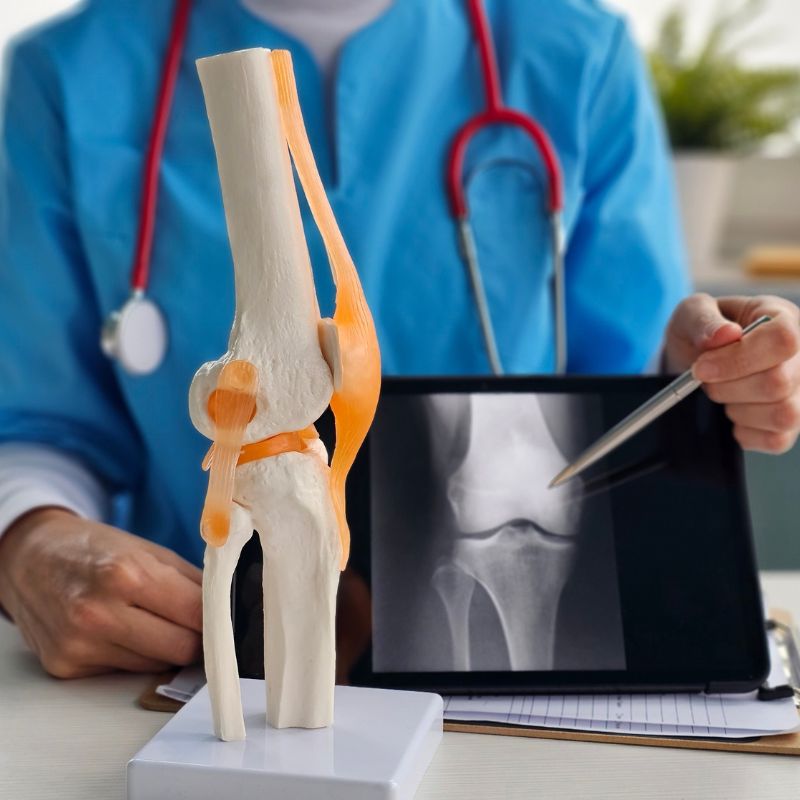
The anterior cruciate ligament (ACL) is one of the four primary ligaments stabilizing the knee joint. It connects the femur to the tibia and plays a central role in controlling rotational movement and forward sliding of the shin bone. When a young athlete twists, pivots, or lands awkwardly from a jump, this ligament can stretch beyond its limits and tear — partially or completely. ACL injuries can occur in virtually any sport but are especially common in sports that involve sudden direction changes, jumping, and physical contact.
For a teen athlete, an ACL tear is not just a physical setback. It can mean missing an entire athletic season, undergoing ACL reconstruction surgery, and enduring a lengthy rehabilitation process that can stretch to nine months or more. Beyond the immediate impact, research in sports medicine has shown that athletes who sustain an ACL injury during adolescence have an elevated risk of developing early-onset osteoarthritis in the affected knee. Understanding the mechanics and risks of ACL injuries in the adolescent population is the first step toward addressing them.
The incidence of ACL injuries has grown alongside the expansion of youth sports participation in the United States. More teenagers are playing competitive, year-round sports than ever before — which means more are exposed to the conditions that make ACL tears likely. Orthopedic specialists working with pediatric and adolescent populations have increasingly made ACL injury prevention a central focus of their practice.
How Common Are ACL Injuries in High School Sports?
ACL injuries are among the most frequently documented sports injuries in high school athletics. Studies tracking injuries in high school sports have found that ACL tears account for a significant portion of all serious knee injuries reported each academic year. The injury rates vary by sport, with football and soccer accounting for a large share of total cases simply due to participation volume and the physical demands of those games. Girls lacrosse, basketball, and gymnastics also see notable rates of ACL injury.
Research published in journals such as the American Journal of Sports Medicine and J Sports Med has documented thousands of ACL injuries in high school settings annually. Some epidemiologic studies estimate that roughly 200,000 ACL reconstruction procedures are performed each year in the United States, with a growing proportion involving adolescent and young adult patients. Injuries in high school athletics represent one of the highest-burden categories, given the combination of physical development factors and competitive intensity.
The rate of ACL injuries varies by gender, sport, and position played. Injuries in high school athletics tend to cluster around certain high-demand sports, but no school sport is entirely without risk. As participation in travel leagues, club sports, and multiple-season competition increases, so does cumulative exposure — a factor that sports medicine professionals believe contributes to the overall rise in anterior cruciate ligament injuries among high school students. Dr. Cappellino has treated athletes from numerous Long Island high schools and consistently sees this pattern reflected in his practice.
Why Are Female Athletes at Greater Risk for ACL Tears?
One of the most well-established findings in sports medicine is that female athletes tear their ACL at significantly higher rates than their male counterparts. Studies have shown that young women are anywhere from 2 to 8 times more likely to sustain an ACL tear compared to male athletes in the same sports. This disparity is particularly pronounced in soccer and basketball, where female soccer players and girls playing other pivot-heavy sports face a substantially elevated risk of ACL injury relative to male soccer players.
Several factors contribute to this increased vulnerability. Anatomical differences, including a wider pelvis, increased knee valgus angle (inward collapse of the knee), and differences in notch width within the knee joint, all play a role. Hormonal factors — specifically the influence of estrogen on ligament laxity — are also believed to contribute to the higher risk of ACL injury in young female athletes. During certain phases of the menstrual cycle, ligament looseness may increase, raising susceptibility to non-contact ACL injuries.
Neuromuscular differences are another major contributor. Compared with male peers, teen girls often demonstrate less activation of the hamstrings relative to the quadriceps during dynamic movement, placing more stress on the anterior cruciate ligament. Girls soccer teams, girls lacrosse programs, and female basketball rosters have all been focal points for ACL prevention research. The good news is that targeted neuromuscular training has been shown to reduce the injury risk meaningfully among girls and young women.
What Sports Put Teen Athletes at the Highest Risk of ACL Injury?
Not all sports are created equal when it comes to ACL injury risk. Sports that involve rapid acceleration and deceleration, pivoting, cutting maneuvers, and landing from a jump are the highest-risk activities. Football and soccer have historically topped the list for total ACL injury volume, while basketball, volleyball, lacrosse, and gymnastics are also high-risk for ACL tears in young athletes. Even sports not typically associated with contact, such as tennis and skiing, carry ACL injury risk due to the knee mechanics involved.
In high school sports specifically, soccer stands out as a particularly high-risk sport for ACL injuries, especially among girls. The combination of running at speed, planting and cutting to change direction, and physical challenges from opponents creates frequent opportunities for the knee to be placed in an ACL-vulnerable position. Similarly, basketball requires players to make explosive cuts, land from jumps, and change directions rapidly — all movements that increase the risk of ACL injury if not executed with proper mechanics.
Multi-sport athletes who play sports throughout the year without adequate rest periods also face elevated risk. Overuse and fatigue are known contributors to injury risk: when muscles tire, they provide less dynamic support to the knee, increasing the load transferred to the ligament. Sports medicine specialists often advise young athletes and their families to build recovery periods into training schedules to reduce the risk of sports-related injuries, including ACL tears.
How Do ACL Tears Actually Happen? Understanding the Mechanism of Injury
Understanding how ACL injuries occur is essential for developing effective prevention strategies. The majority of ACL tears in young athletes are non-contact ACL injuries — meaning they happen without a direct blow to the knee. Instead, they occur during dynamic movements such as pivoting on a planted foot, decelerating suddenly, or landing from a jump with the knee in an extended or valgus (caved-in) position. These biomechanical patterns are often ingrained through years of play without proper technique training.
When a young athlete lands from a jump with the knee straight and slightly inward-rotated, the forces transmitted through the joint can exceed what the anterior cruciate ligament can absorb. A sudden pivot or plant-and-cut movement creates a torsional load on the knee that, if the supporting musculature is not adequately activated, gets transferred directly to the ligament. Athletes often describe feeling or hearing a “pop” at the moment of the injury, followed by immediate pain, swelling, and instability.
Contact ACL injuries can also occur, typically when a force is applied to the outside of the knee while the foot is planted, driving the knee inward and stretching the ligament past its capacity. ACL tears in young athletes frequently involve the meniscus as well — the cartilage cushioning the knee — which can complicate recovery. Meniscus damage alongside an ACL tear is common and can influence surgical planning and long-term outcomes for the adolescent athlete.
What Happens After an ACL Tear? Diagnosis, Surgery, and Recovery
Following a suspected ACL tear, an orthopedic evaluation is critical. Diagnosis typically involves a physical examination and is confirmed with an MRI scan, which allows the physician to assess the extent of ligament damage and identify any concurrent meniscus or cartilage injuries. For most active young athletes, ACL reconstruction surgery is recommended to restore knee stability and allow a return to sports at full capacity. Without reconstruction, the knee remains unstable and at high risk for further injury.
ACL reconstruction involves replacing the torn ligament with a graft — typically harvested from the patellar tendon, hamstring, or quadriceps tendon autograft — and anchoring it in place to restore the ligament’s function. Pediatric and adolescent reconstruction cases require special surgical consideration, as an open growth plate can affect graft placement decisions. Anterior cruciate ligament reconstruction in skeletally immature patients demands careful planning to avoid growth complications. Dr. Anthony Cappellino performs minimally invasive arthroscopic knee surgery for high school, collegiate, and recreational athletes, applying techniques refined during his fellowship training at the prestigious Kerlan-Jobe Clinic in Los Angeles — where he served as assistant team physician for several professional sports organizations.
Recovery from ACL surgery is measured in months, not weeks. Athletes typically return to full sport-specific training around nine to twelve months post-surgery, though some return earlier and others take longer depending on rehabilitation progress and the demands of their sport. The risk of ACL retear is a major concern, particularly in the first two years after returning to play. ACL retear rates are notably higher in young athletes who return to sport too quickly or before meeting functional readiness benchmarks established by their sports medicine team.
Can You Prevent ACL Tears? Evidence-Based Strategies for Young Athletes
ACL injury prevention is one of the most actively researched areas in sports medicine, and the evidence is clear: structured prevention programs work. Programs designed around neuromuscular training — including exercises that target landing mechanics, core stability, hip strength, and dynamic balance — have been shown to significantly reduce the risk of ACL injury among high school and youth sports participants. When implemented consistently as part of warm-up routines, these programs address the movement deficiencies that make athletes vulnerable.
The FIFA 11+ program and similar neuromuscular warm-up protocols have been widely studied and shown to produce reduced injury rates in soccer populations. These protocols incorporate plyometric and strengthening exercises such as squats and jumps, single-leg balance work, hip abductor strengthening, and guided landing technique drills. Athletes often show significant improvement in their movement patterns — particularly in how they absorb force through the knee — after completing these programs consistently over multiple weeks.
ACL prevention programs are most effective when introduced early — ideally in youth sports before poor movement habits become ingrained. Coaches, athletic trainers, and school sports programs that adopt these protocols as standard practice have seen measurable reductions in ACL injury rates among their athletes. ACL injury prevention is not just a clinical concern; it is a coaching and program-design responsibility as well.
What Role Do Coaches and Schools Play in Reducing ACL Injuries Among High School Athletes?
High schools and athletic programs are uniquely positioned to help reduce ACL injury rates across an entire generation of athletes. By integrating evidence-based warm-up and movement quality programs into daily practice routines, schools can reduce the risk of injury for every student-athlete on the roster. The challenge is adoption: many coaches are unaware of the specific protocols, and busy practice schedules can make consistency difficult. However, the investment is minimal relative to the costs — physical, emotional, and financial — of a torn ACL.
High school athletic trainers serve as a critical bridge between clinical sports medicine and the playing field. Certified athletic trainers who are familiar with ACL prevention research can implement warm-up protocols, educate coaches on risk factors, and monitor athletes for movement patterns that increase their vulnerability. Schools that invest in certified athletic training staff and give them time with each team are better positioned to reduce sports injuries across all programs.
Parent education is another underutilized resource. Many families are unaware that female athletes face a greater risk of ACL injury than male athletes, or that early sport specialization and year-round competition without adequate rest may increase the risk of ACL tears in young athletes. Open conversations between families, coaches, and sports medicine specialists about training load, recovery, and movement quality can help athletes of all ages build careers that stay healthy longer.
What Is the Long-Term Outlook for a Teen Athlete After an ACL Injury?
For most young athletes, a well-managed ACL tear — followed by surgical reconstruction and thorough rehabilitation — does not mark the end of their athletic career. Athletes typically return to sports at a competitive level, and many go on to play at the college level or beyond. However, the road back is demanding, and the psychological aspect of recovery is often underestimated. Fear of re-injury, loss of confidence, and the emotional toll of watching teammates compete from the sidelines can be significant obstacles.
The risk of ACL retear is a legitimate concern. Young athletes who return to pivoting and jumping sports face an elevated risk of tearing the same or opposite knee’s ligament in the years following surgery. Meeting functional return-to-sport criteria — not just hitting a calendar milestone — is critical for reducing re-injury risk. These criteria include measures of strength symmetry, neuromuscular control, and sport-specific performance testing that confirm the reconstructed knee is ready to handle competitive demands.
Meniscus preservation during ACL reconstruction is a major factor in long-term joint health outcomes. Athletes who sustain combined ACL and meniscus injuries face an elevated risk of cartilage degeneration over time. Advances in orthopedic surgery and rehabilitation have improved outcomes for adolescent patients significantly, but the long-term risks underscore why ACL injury prevention — avoiding the tear in the first place — remains the most valuable investment any young athlete or athletic program can make.
When Should a Teen Athlete See an Orthopedic Specialist About Knee Pain?
Not every knee injury in a young athlete is an ACL tear, but all significant knee injuries deserve prompt evaluation. Any athlete who experiences a “pop” in the knee, immediate swelling, instability, or difficulty bearing weight after a sports-related incident should be seen by an orthopedic or sports medicine specialist as soon as possible. Delayed diagnosis can complicate treatment options and increase the risk of additional damage to the meniscus and surrounding structures.
Athletes who experience recurring knee pain, swelling after activity, or a sensation of the knee “giving way” should also seek evaluation even in the absence of a known acute injury. Chronic instability can indicate a partial or missed ACL tear that warrants imaging and clinical assessment. A sports medicine specialist or orthopedic surgeon with experience treating the adolescent population can provide an accurate diagnosis and lay out a clear treatment plan — whether that involves surgery, rehabilitation, or a structured monitoring approach.
Early, expert evaluation gives young athletes the best chance at a full recovery and the clearest picture of their options. Dr. Anthony Cappellino is a board-certified orthopedic surgeon and sports medicine specialist serving athletes throughout Long Island from his West Babylon practice. As Chairman of Orthopaedic Surgery at Good Samaritan Hospital Medical Center and a long-time sideline physician for local high school football teams, Dr. Cappellino brings both clinical expertise and genuine community commitment to the care of young athletes. Whether the goal is a return to play, a prevention consultation, or post-surgical rehabilitation, his practice offers comprehensive orthopedic care tailored to each patient’s needs. To schedule a consultation, visit anthonycappellinomd.com or call the West Babylon office directly.
Key Takeaways: ACL Injuries in High School Athletes
- ACL tears are one of the most serious knee injuries affecting teen athletes in high school sports, with thousands of anterior cruciate ligament injuries occurring each year across the country.
- Female athletes face a significantly greater risk of ACL injury than male athletes — particularly in soccer, basketball, lacrosse, and other pivot-heavy sports — due to anatomical, hormonal, and neuromuscular differences.
- The majority of ACL tears in young athletes are non-contact injuries triggered by landing, pivoting, or cutting — not direct impact — meaning movement mechanics play a central role in prevention.
- Sports medicine research consistently shows that neuromuscular training programs — incorporating plyometric and strengthening exercises — can reduce the risk of ACL injury when implemented consistently.
- ACL reconstruction is the standard treatment for active young athletes with a torn ACL, though pediatric cases require careful surgical planning to protect open growth plates.
- Recovery from ACL surgery typically takes 9–12 months; ACL retear is a real risk for athletes who return to sport before meeting functional readiness criteria.
- Meniscus damage frequently accompanies ACL injuries and can influence both surgical planning and the athlete’s long-term joint health outlook.
- High schools, coaches, and athletic trainers can meaningfully reduce ACL injury rates among their athletes by adopting evidence-based prevention protocols and educating families about risk factors.
- Any teen athlete who sustains a “pop” in the knee, experiences swelling, or notices joint instability should be evaluated promptly by an orthopedic or sports medicine specialist.
- The most effective strategy against ACL injuries is prevention — through proper training, movement education, and working with experienced sports medicine professionals before an injury occurs.


