
Knee pain is a prevalent issue that affects people of all ages and activity levels. Whether caused by an injury, overuse, or underlying medical conditions, knee pain can significantly impact daily activities and mobility. Understanding the common causes of knee pain is essential for effective treatment and prevention.
1. Injuries
Knee injuries are a leading cause of knee pain and can result from sports, accidents, or sudden movements. Some of the most common knee injuries include:
- Ligament Injuries: The knee has four main ligaments, including the anterior cruciate ligament (ACL) and the medial collateral ligament (MCL). ACL tears often occur during sports that
 involve jumping or sudden changes in direction, while MCL injuries typically result from direct impact to the knee.
 - Meniscus Tears: The meniscus is a piece of cartilage that acts as a cushion between the shinbone and thighbone. A sudden twist or impact can cause a meniscus tear, leading to pain, swelling, and limited movement.
- Patellar Tendinitis: Also known as jumper’s knee, this condition involves inflammation of the patellar tendon, which connects the kneecap to the shinbone. It commonly affects athletes who engage in repetitive jumping or running.
- Fractures: Direct trauma to the knee, such as falls or car accidents, can cause fractures of the kneecap or surrounding bones, leading to severe pain and instability.
 involve jumping or sudden changes in direction, while MCL injuries typically result from direct impact to the knee.
2. Arthritis
Arthritis is a common cause of chronic knee pain, particularly in older adults. Several types of arthritis can affect the knee:
- Osteoarthritis (OA): The most common form of arthritis, OA occurs when the protective cartilage in the knee gradually wears down over time, leading to pain, stiffness, and swelling.
- Rheumatoid Arthritis (RA): An autoimmune condition where the body’s immune system attacks the synovial lining of the knee joint, causing inflammation and pain.
- Gout and Pseudogout: These conditions result from the buildup of crystals in the knee joint, leading to sudden and intense pain episodes.
3. Overuse and Mechanical Problems
Repetitive stress on the knee joint can lead to overuse injuries and mechanical issues, such as:
- Runner’s Knee (Patellofemoral Pain Syndrome): A common condition among runners and athletes, this condition causes pain around the kneecap due to misalignment or overuse.
- Iliotibial (IT) Band Syndrome: The IT band is a thick tissue running from the hip to the knee. When it becomes tight or inflamed, it can cause pain on the outer side of the knee.
- Bursitis: The bursae are small fluid-filled sacs that cushion the knee joint. Inflammation of these sacs due to repetitive kneeling or trauma can cause knee pain.
4. Other Medical Conditions
Certain medical conditions can contribute to knee pain, including:
- Infections: Septic arthritis occurs when bacteria enter the knee joint, leading to severe pain, swelling, and fever.
- Obesity: Excess weight places additional stress on the knee joint, increasing the risk of osteoarthritis and knee pain.
Contact Dr. Anthony Cappellino
If you are experiencing knee pain, it is important to seek evaluation from an experienced orthopedic specialist like Dr. Anthony Cappellino. Identifying the underlying cause is the first step toward effective treatment and long-term relief. Schedule a consultation today to get the care you need and take the first step toward pain-free movement.
When to See a Shoulder Surgeon: Warning Signs You Shouldn’t Ignore
Shoulder pain is one of the most common orthopedic complaints, and while minor aches often improve with rest, some cases signal a more serious issue that requires specialized care. If you’re searching for a shoulder surgeon in Patchogue, understanding the warning signs that indicate when to see an orthopedic specialist can help you take the right next step toward recovery.
Common Shoulder Problems That May Require Surgery
The shoulder is a complex joint that provides a wide range of motion, but that flexibility also makes it vulnerable to injuries and wear-and-tear conditions. Some of the most common issues include:
- Rotator Cuff Tears – Damage to the group of tendons and muscles stabilizing the shoulder. Learn more about our rotator cuff repair options.
- Shoulder Impingement – Occurs when tendons are pinched during arm movement.
- Labral Tears – Tears to the cartilage surrounding the joint socket, often caused by sports injuries.
- Arthritis – Gradual breakdown of cartilage leading to stiffness and pain.
If conservative treatments such as rest, anti-inflammatory medications, or physical therapy don’t bring relief, it may be time to consult a surgeon.
Warning Signs You Shouldn’t Ignore
Not every shoulder issue requires surgery, but certain symptoms should not be overlooked:
- Persistent pain lasting more than a few weeks
- Weakness in the arm or shoulder, especially when lifting
- Difficulty performing daily tasks such as reaching overhead or behind the back
- Shoulder instability or frequent dislocations
- Night pain that interferes with sleep
If you are experiencing any of these issues, schedule a consultation with Dr. Cappellino to discuss whether surgical intervention may be necessary.
What to Expect During an Evaluation
When you visit our office for shoulder pain, Dr. Cappellino performs a comprehensive evaluation, which may include:
- Detailed Medical History – Understanding your symptoms, activity level, and prior injuries.
- Physical Examination – Assessing range of motion, strength, and joint stability.
- Diagnostic Imaging – X-rays or MRI scans to confirm the underlying problem.
Based on your evaluation, you’ll receive a customized treatment plan that may involve conservative care such as physical therapy or, when appropriate, minimally invasive surgical options like shoulder arthroscopy.
Surgical Options for Shoulder Relief
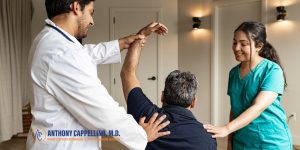
For patients who need advanced treatment, Dr. Cappellino offers a range of surgical procedures:
- Arthroscopic Surgery – A minimally invasive procedure using small incisions and a camera to repair damage.
- Rotator Cuff Repair – Surgical reattachment of torn tendons to restore strength and mobility.
- Labral Repair – Correcting cartilage tears for athletes or patients with instability.
- Shoulder Replacement – For severe arthritis or irreparable damage, a partial or total replacement may be recommended.
Each surgical approach is designed to reduce pain, restore function, and improve long-term joint health.
Recovery and Rehabilitation
Surgery is just the first step in the healing process. Recovery typically includes:
- Physical Therapy – Essential for regaining strength, mobility, and flexibility.
- Post-Operative Care – Following guidelines for pain management and wound healing.
- Gradual Return to Activity – Patients often resume light activities within weeks, while full recovery may take several months depending on the procedure.
According to the Mayo Clinic, proper rehabilitation is critical for achieving the best outcomes after shoulder surgery.
Why Choose Dr. Anthony Cappellino?
Patients throughout Suffolk County choose Dr. Cappellino for his:
- Board Certification in Orthopedic Surgery and Sports Medicine
- Extensive Experience in treating athletes and active individuals
- Advanced Surgical Techniques that prioritize minimally invasive approaches
- Personalized Care Plans tailored to each patient’s unique condition and goals
By choosing Dr. Cappellino, you’re not only receiving expert surgical care, but also a compassionate, patient-first approach that emphasizes long-term recovery.
Schedule Your Consultation Today
If you are dealing with chronic shoulder pain or suspect a more serious condition, don’t delay treatment. The sooner you seek help, the better your chances of a full recovery. For those looking for a trusted shoulder surgeon in Patchogue, Dr. Anthony Cappellino and his team are here to provide the specialized care you need.
Visit our contact page to schedule an appointment and take the first step toward restoring your shoulder health.