
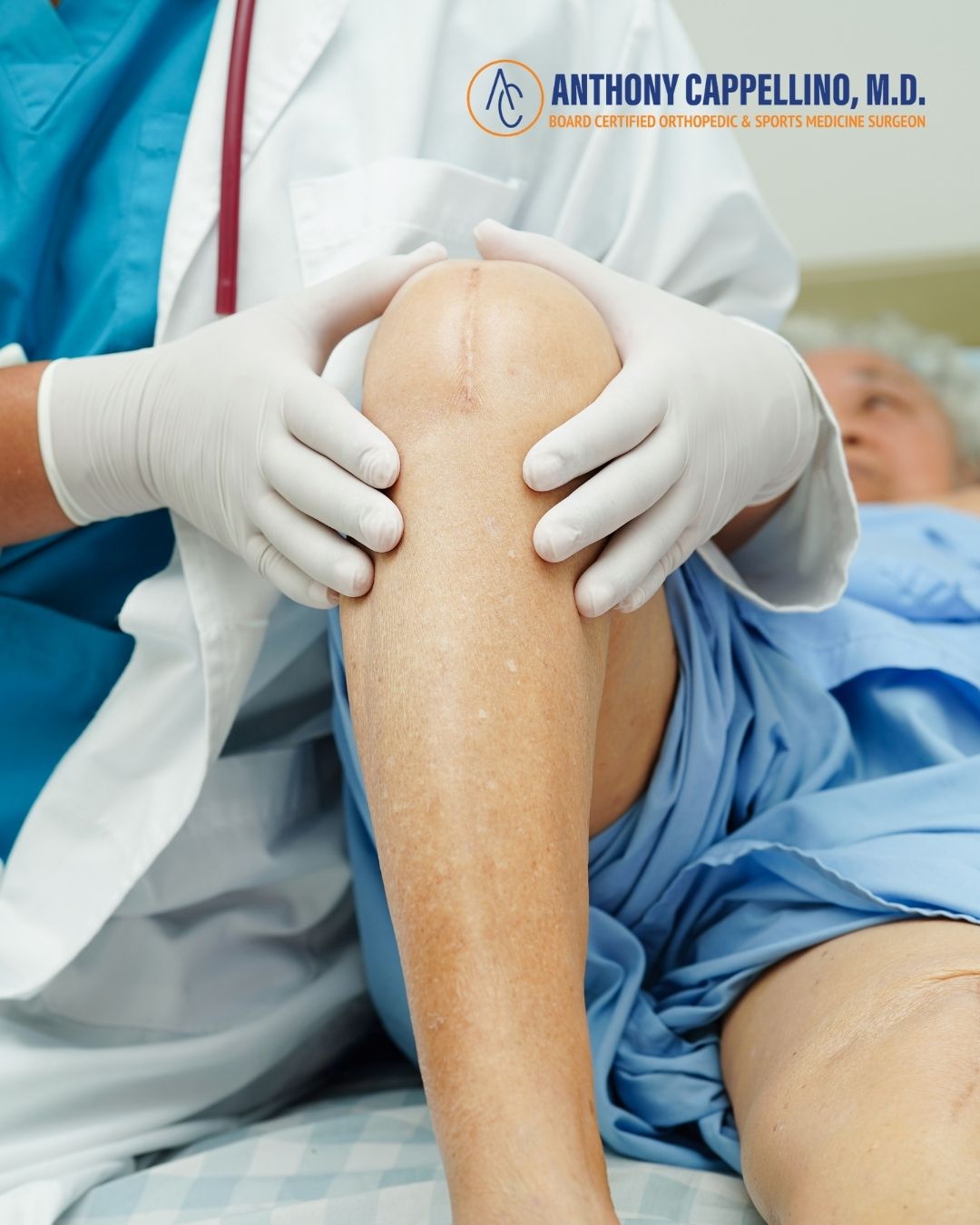
Comprehensive Knee Replacement Surgery in West Babylon NY
If you are considering knee replacement surgery — whether for advanced osteoarthritis, joint degeneration, or a knee that has stopped responding to conservative care — the surgeon you choose matters as much as the procedure itself.
- Total Knee Replacement Surgery in Babylon, NYReplace damaged areas of the knee joint, including the femur, tibia, and kneecap, with an artificial knee implant. Ideal for patients with severe arthritis, osteoporosis, or joint damage from injury or degeneration. Components are precisely aligned using specialized jigs for smooth gliding and long-lasting results.
- Minimally Invasive Knee ArthroplastySmaller incisions and reduced trauma to the surrounding tendon and soft tissues. Speeds up recovery while preserving range of motion and joint function.
- Knee Revision SurgeryExpert in revision procedures to correct failed or outdated knee replacements.
- Comprehensive Orthopedic Care for the KneeWe treat a variety of conditions, including arthritic knees, damaged cartilage, sports injuries, and degeneration. Personalized treatment options include physical therapy, joint injections, and non-surgical care before surgery is considered.
Dr. Anthony Cappellino, MD is a board-certified orthopedic surgeon who has practiced in West Babylon, NY for more than three decades. His subspecialty training in sports medicine — completed at the world-renowned Kerlan-Jobe Orthopaedic Clinic in Los Angeles, where he served as assistant team physician for the Los Angeles Lakers, Los Angeles Dodgers, Los Angeles Kings, Anaheim Angels, and USC Trojan football — informs every aspect of his approach to total and partial knee replacement. He currently serves as Chairman of Orthopaedic Surgery at Good Samaritan University Hospital and has performed knee procedures for Long Island patients since 1992.
Knee replacement at Dr. Cappellino’s West Babylon office is built around three principles: rigorous patient selection (surgery is recommended only when conservative care has been exhausted), modern Stryker implant systems and minimally invasive surgical technique, and a personalized recovery plan that begins long before the procedure and continues through full return to activity.
Why Choose Dr. Cappellino for Knee Replacement Surgery in West Babylon NY?
- More than three decades of experience.Dr. Cappellino began practicing orthopedic surgery in 1992 and has performed thousands of knee procedures across his career on Long Island.
- Sports medicine fellowship at Kerlan-Jobe.Dr. Cappellino completed his subspecialty training at the Kerlan-Jobe Orthopaedic Clinic in Los Angeles — the same fellowship program that has produced team physicians for the Lakers, Dodgers, Kings, Angels, and USC Trojan football for decades — and where Dr. Cappellino himself served as assistant team physician. This sports medicine background informs his approach to joint reconstruction in patients who want to return to active lives after surgery.
- Yale-trainedDr. Cappellino completed his orthopedic residency at Yale-New Haven Medical Center, where he served as Chief Resident in his final year — a position reserved for the top resident in the program.
- Chairman of Orthopaedic Surgery at Good Samaritan University Hospital. In addition to his private practice, Dr. Cappellino leads the orthopaedic department at Good Samaritan, one of Long Island's largest and most respected hospitals.
- Board-certified by the American Board of Orthopaedic Surgery with subspecialty certification in Orthopaedic Sports Medicine.
- Convenient West Babylon location with flexible scheduling
- Stryker implant systems.Dr. Cappellino's practice uses modern Stryker knee implants — precision-engineered components designed for natural motion and long-term durability.
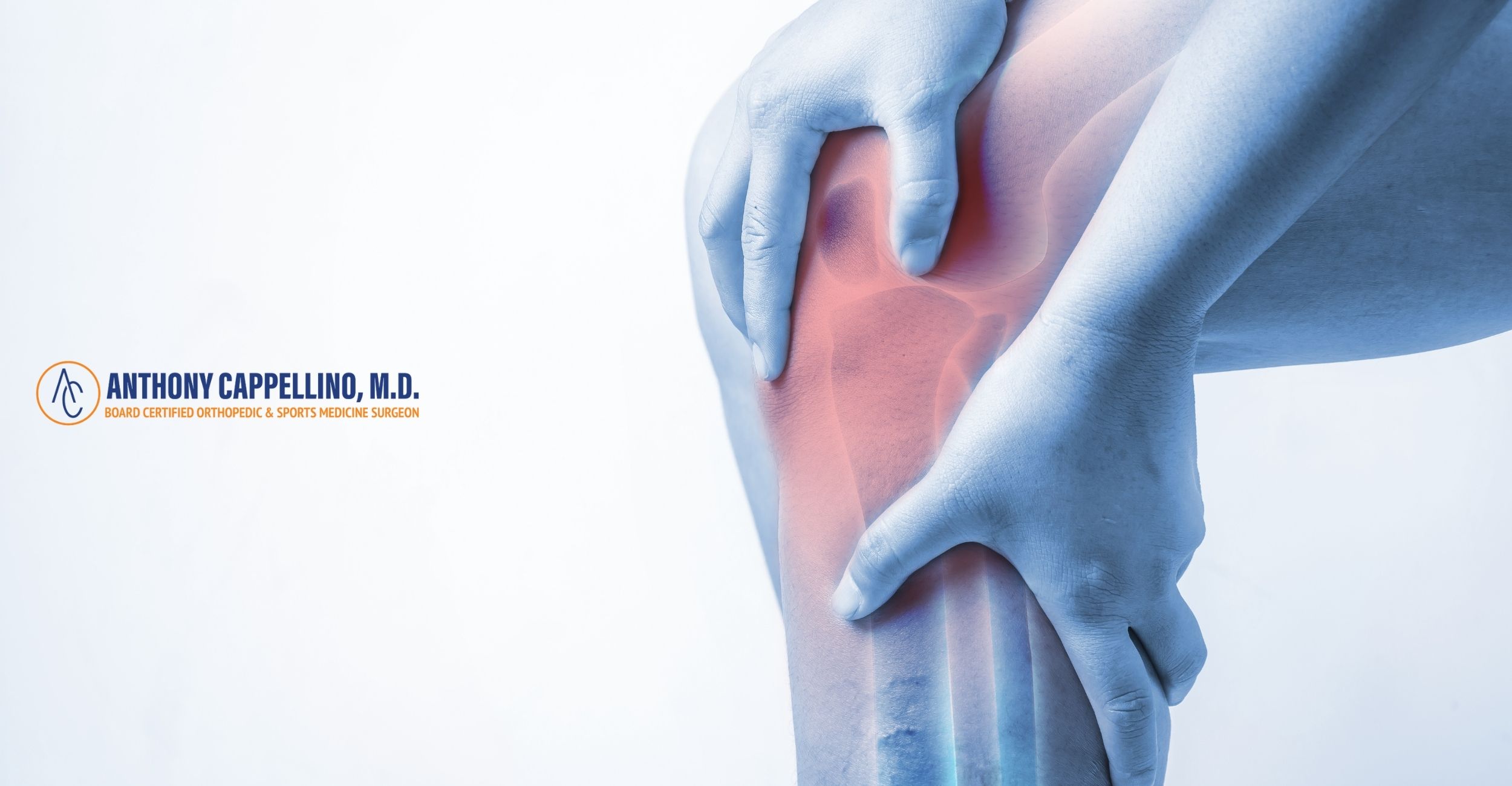
Conditions Treated with Knee Replacement
- Severe OsteoarthritisThe most common reason for knee replacement. Osteoarthritis is a degenerative condition in which the cartilage cushioning the knee joint wears away, causing pain, stiffness, swelling, and loss of mobility. When osteoarthritis is advanced and conservative care no longer provides relief, knee replacement can restore quality of life.
- Rheumatoid ArthritisAn autoimmune condition in which the body's immune system attacks the joint lining, causing pain, swelling, and progressive joint damage. Patients with severe rheumatoid arthritis in the knee may benefit from knee replacement when medical management is no longer sufficient.
- Post-Traumatic ArthritisArthritis that develops in the years following a serious knee injury — a fracture, ligament rupture, or meniscus tear — can progress to require knee replacement, particularly when the original injury altered the mechanics of the joint.
- Avascular Necrosis (Osteonecrosis)When blood flow to the bone is interrupted, the bone tissue can die and the joint surface can collapse. In advanced cases affecting the knee, replacement may be necessary.
- Severe Knee DeformityBowed legs (varus deformity) or knock-knees (valgus deformity) that have become severe can damage the knee joint over time. Knee replacement, often paired with corrective alignment, can restore both function and limb alignment.
- Failed Prior Knee SurgeryWhen a prior knee surgery — including a previous replacement — has not produced the desired result, revision knee replacement may be needed.
Our Comprehensive Treatment Approach
We believe in a personalized approach to knee care, starting with conservative methods and progressing to surgical options only when necessary.
Initial Consultation
Surgical Decision & Pre-Operative Planning
Rehabilitation
Diagnostic Imaging & Evaluation
The Surgical Procedure
Long-Term Follow-Up
Conservative Care First
Post-Operative Hospital Care
Don’t Let Knee Pain Hold You Back!
Schedule your consultation with Dr. Cappellino today and take the first step toward pain-free movement in West Babylon.
Frequently Asked Questions
Total knee replacement typically takes one to two hours of operating time. Partial knee replacement is usually faster. The full hospital experience — including pre-operative preparation, surgery, and initial recovery — generally takes about four to six hours.
Most patients begin walking with assistance the same day as surgery. Initial recovery — being able to walk without crutches or a walker, drive, and return to most daily activities — typically takes four to six weeks. Full recovery, including return to lower-impact sports and physical activity, generally takes three to six months. Patients should expect to participate in formal physical therapy for six to twelve weeks after surgery.
Modern Stryker knee implants are designed to last 15 to 25 years or longer in most patients, with some implants performing well beyond that range. Implant longevity depends on patient factors (age, weight, activity level) and surgical factors (precision of alignment, soft-tissue balance).
Partial knee replacement is appropriate for patients whose arthritis is confined to a single compartment of the knee, with healthy cartilage in the remaining compartments and intact ligaments. Imaging and physical examination determine eligibility. When the criteria are met, partial replacement offers a faster recovery and a more natural-feeling result than total
Knee replacement is one of the most successful procedures in modern medicine, with approximately 90% of patients reporting significant pain relief and improved function. Success depends on appropriate patient selection, surgical technique, implant choice, and post-operative rehabilitation.
Knee replacement is covered by virtually all major insurance plans, including Medicare. Pre-authorization is typically required and is handled by Dr. Cappellino’s office. The practice accepts most major insurance plans, including Aetna, Cigna, Blue Cross Blue Shield, and UnitedHealthcare.